

If you have searched for “playing games blog playbattlesquare,” you have probably noticed that the results do not agree with each other. One page describes a browser-based battle platform, another calls it a battle royale title, a third talks about Minecraft-style maps, and a few older pages mention a mobile game that turned real cities into a strategy board. This guide sorts out those claims in plain language, explains what can actually be confirmed, and gives you practical advice for enjoying browser strategy games without wasting time or taking risks.
Why the Search Results Feel So Confusing
The name “PlayBattleSquare” appears in many places, but it does not point to one single, well-documented product. A large number of the pages that rank for this phrase are general gaming blogs that describe the name in broad and almost identical terms. Several of them use the word as a label for a whole style of play, such as “arena-style combat” or “battle royale gaming,” without naming a developer, a release date, or any screenshots you can check. When a page talks about a game this loosely, it is usually a sign that the writer is filling a keyword rather than reporting on something they have played.
This does not mean every claim is false. It means you should treat descriptions that lack names, dates, or proof with caution. In the sections below, the facts that can be backed up are separated from the claims that could not be confirmed, so you can decide for yourself how much trust to place in each.
What Is Actually Verified About Battlesquare
The most solid history belongs to an iPhone game called Battlesquare. It was a real-world strategy game in the style of the board game Risk, and it connected to a player’s Foursquare account. Instead of moving pieces on a table, you checked in at real places, and each check-in deployed troops at that location. The more you reinforced the places you visited, the better your chances of taking over a whole city, region by region, often in competition with friends. A tech blog that covered the game at the time also noted that it had its own website at playbattlesquare.com, with a promotional video and a link to the App Store, where it was priced at 0.99 dollars.
This type of game was part of a small wave of experiments that used the Foursquare check-in system as a game board. Other examples from the same period include FoursqWAR, an iPhone game in which players attacked and defended Foursquare venues, and World of Fourcraft, a hackathon project that turned New York City’s five boroughs into a Risk-style map. These projects show why the idea of a “battle square” made sense back then: the squares were real places, and the battles were played with phones.
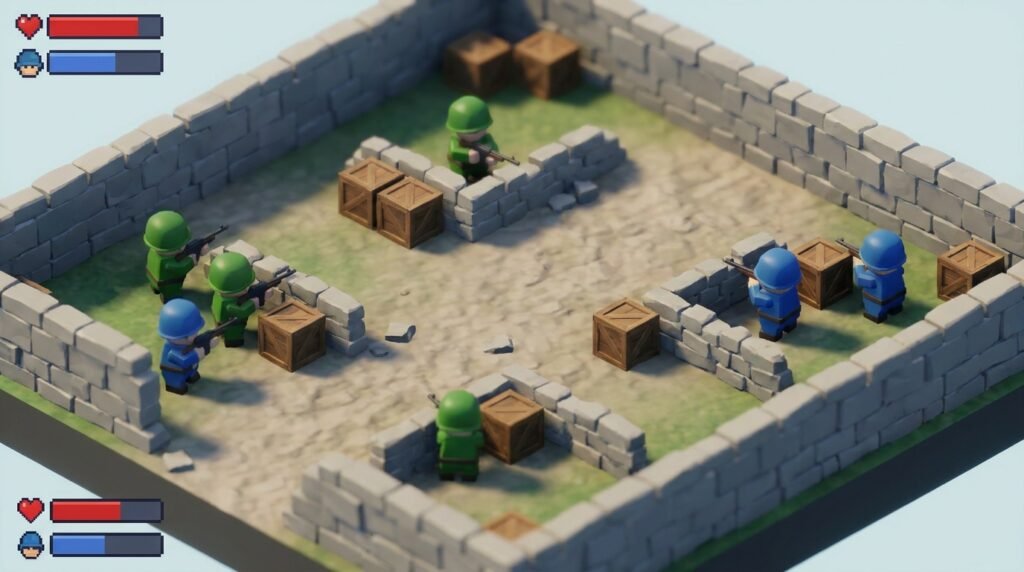
A second, completely separate title called Battle Square also exists. It is a free browser game published on itch.io by a solo developer who goes by Infinity StudioX. It was made with Unity, runs in HTML5, and is listed as a turn-based strategy game. The developer has said they built it after following a C# game development course, and the game was released in August 2025. In it, you select a unit with the mouse, choose an action from the bottom of the screen, and end your turn when you want to gain more action points. Enemies can attack you after you end your turn, so timing matters. This is a small indie project rather than a large platform, but it is a real, playable game with clear controls.

Claims That Could Not Be Confirmed
Some blogs say that PlayBattleSquare is a full online platform with ranked leagues, seasonal competitions, Minecraft-inspired maps, controller support, and a rendering style that imitates soft voxel lighting. Others describe it as a major battle royale game with millions of players and billions in revenue. During research for this article, none of these statements could be matched to an official developer page, an app store listing, a press release, or a trusted gaming outlet. They may be accurate for some product, but there is no reliable evidence that they apply to the Battlesquare games described above.
The honest approach is to say so. If you read a claim about player counts, prizes, or revenue connected to this name, look for a named company and a page you can verify before you believe it. Because the official status of the playbattlesquare.com address today could not be confirmed, it is also wise to be careful about entering personal details on any site that uses this name.
How Games on These Platforms Usually Work
Even though the products differ, most browser-based strategy games share a few core ideas. Understanding them will help you learn any title quickly.
First, they run inside your web browser, which means there is usually nothing to install, and a session can be as short as a few minutes. Second, many of them are turn-based. You spend a limited number of action points on moving, attacking, or defending, and then you pass the turn. This rewards planning more than fast reflexes. Third, they depend on position and resources. Whether the map is a grid of squares or a real city, controlling the right spots at the right time is what wins matches.
The original iPhone Battlesquare followed the same logic in a different form. Every check-in was a resource, and every location was a square worth defending. That is a useful way to think about all games with this name: territory, timing, and careful use of limited actions.
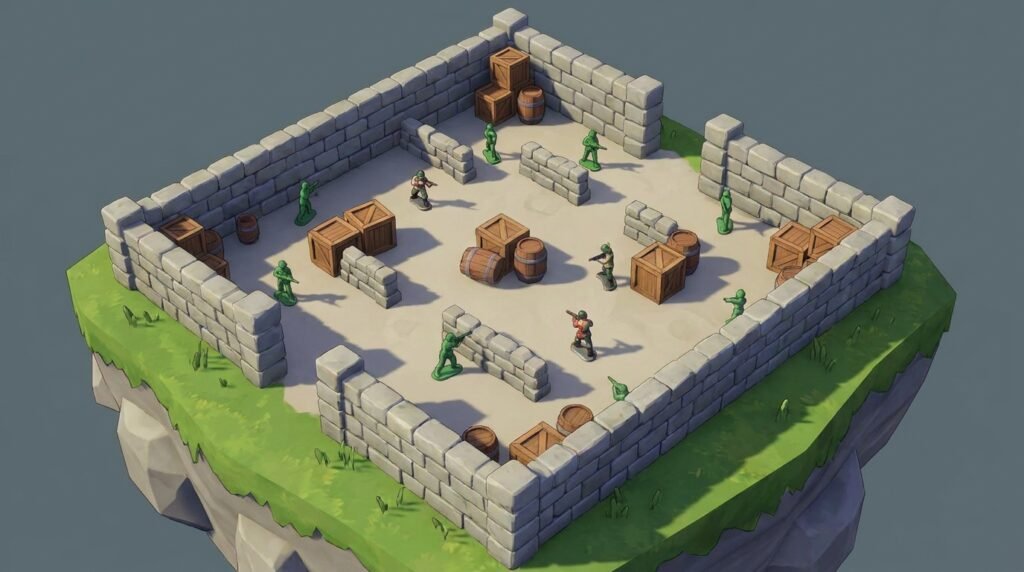
Practical Tips for Playing Strategy Games in Your Browser
A few habits can improve your results in almost any turn-based browser game, including Battle Square on itch.io.
Start by learning the controls before you try to win. In Battle Square, for example, you move the camera with the W, A, S, and D keys and rotate it with Q and E, so spending a minute on the camera makes every later decision easier. Next, use area attacks on groups of enemies rather than wasting actions on single targets, because clumped enemies are the best value for grenade-style moves. It is also smart to end your turn when no enemies are nearby, since that lets you collect more action points without taking any risk. Finally, use walls and cover whenever the game allows it, because staying out of sight is often stronger than trying to out-shoot an opponent.
Beyond individual games, a steady routine matters. Short sessions help you stay sharp, and reviewing a lost match for even a couple of minutes will teach you more than playing three more without thinking.
How to Judge a Gaming Blog or Platform Before You Trust It
Because so many pages about this keyword look alike, a quick checklist can save you from poor information and unsafe sites. Look for a named developer or publisher, since real games almost always have one. Check whether the site shows actual screenshots or gameplay videos instead of generic stock images. Be wary of pages that promise big wins, guaranteed rewards, or “proven ways to win big” for a free game, because that language is usually a marketing hook. Make sure the site uses HTTPS and does not ask for passwords, payment details, or downloads that you did not expect. When a page describes a game in many paragraphs without ever telling you the genre, the platform, or the release date, it is probably written for search engines rather than for players.
Trusted places to find browser games include established indie portals where developers post their own work, the official app stores for mobile titles, and well-known gaming news sites that name their sources and authors.
Is Playing Games on a Blog Safe and Worth Your Time?
Playing browser games can be a relaxing way to take a break, and strategy titles in particular can sharpen planning skills. The main risks come from the sites around the games, not the games themselves. Avoid downloading files from unfamiliar pages, do not reuse your important passwords, and be cautious with any site that asks you to pay before showing you what the game is. If a free browser game on a reputable portal loads and plays without requests for personal data, it is generally a low-risk way to spend a few minutes.
Frequently Asked Questions
Is PlayBattleSquare a battle royale game? There is no reliable evidence of that. The best-documented Battlesquare was a Risk-style iPhone game linked to Foursquare check-ins, and the separate Battle Square on itch.io is a turn-based strategy game.
Is there a free Battlesquare game I can play in my browser? Yes, the Battle Square game by Infinity StudioX on itch.io is listed as free to play in the browser. It is a different project from the older iPhone game.
Do I need to download anything to play Battle Square? It is built for HTML5, so it can be played in a browser. A downloadable zip version is also offered, and it only needs to be unzipped before playing.
Does the original iPhone Battlesquare still work? It depended on Foursquare’s check-in system as it existed at the time, and its current availability could not be confirmed, so you should not count on it being playable today.
Why do so many blogs describe it differently? Many of them are written to capture search traffic and repeat vague descriptions rather than reviewing a specific game. That is why checking names, dates, and developers matters.
Final Thoughts
The phrase “playing games blog playbattlesquare” leads to a mix of real history, small indie projects, and a lot of generic filler. What can be said with confidence is that Battlesquare was a Foursquare-powered, Risk-style game for iPhone, and that a free turn-based Battle Square exists in the browser thanks to an independent developer. Everything beyond that should be approached with healthy skepticism. If you enjoy strategy, start with the playable browser game, learn its controls, plan your turns carefully, and always check who is behind a site before you share any personal information.
Disclaimer
This article is for general information and entertainment only. Details about games, platforms, prices, and availability can change at any time, and some websites that use the name PlayBattleSquare may not be connected to the games described here. We are not affiliated with any developer, publisher, or website mentioned. Before visiting a site, downloading a file, or sharing personal or payment information, verify it independently and use trusted security practices. Play responsibly, and take regular breaks.