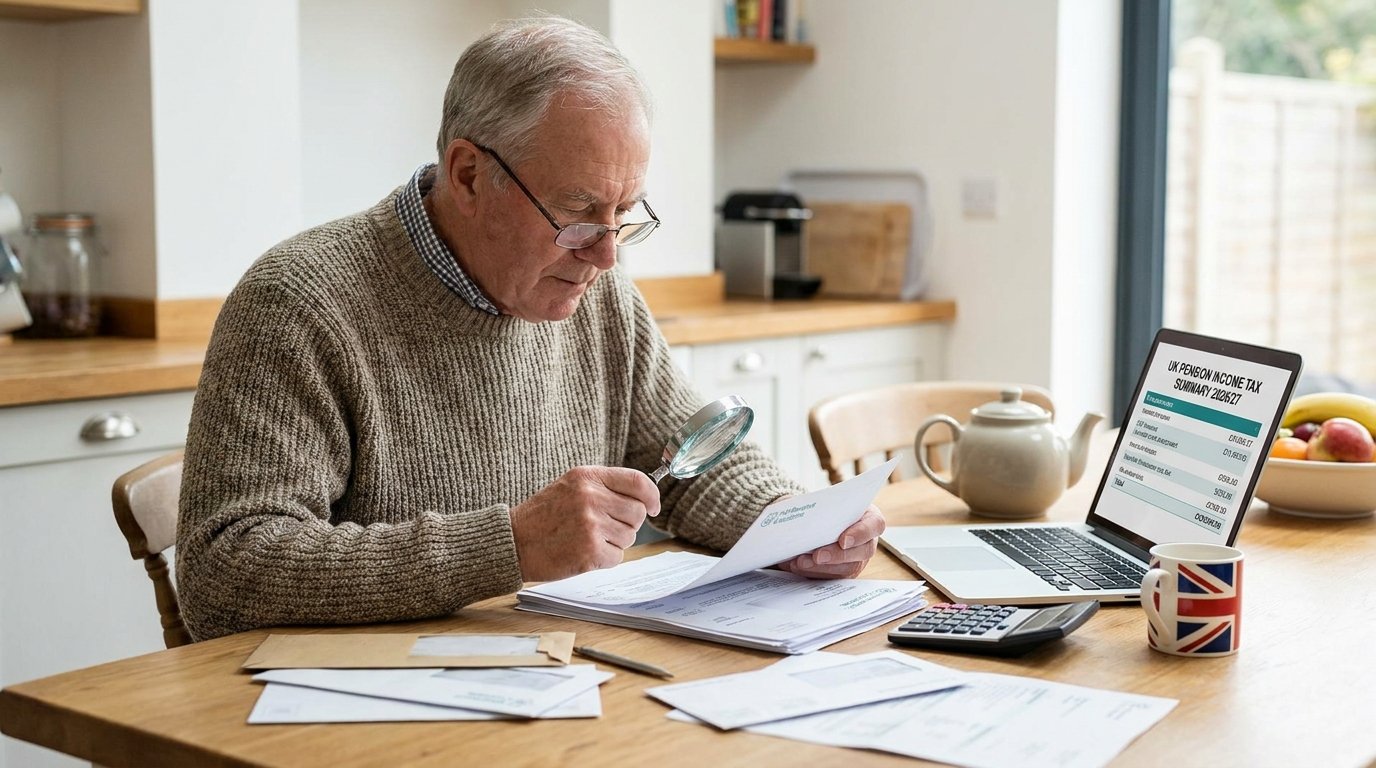
Most people expect retirement to bring a simpler tax life, but the reality is a little more complicated. Pensioners in the UK do not get a special tax-free allowance just because of their age, and the state pension itself counts as taxable income. The good news is that many pensioners still pay little or no income tax, provided their total income stays within certain limits. This guide explains those limits for the 2026/27 tax year (6 April 2026 to 5 April 2027), how different types of income are treated, and what you can do to keep more of your money.
The short answer: £12,570 for most pensioners
For the 2026/27 tax year, the standard Personal Allowance is £12,570. This is the amount of total taxable income you can receive in a year before you start paying income tax, and it applies to pensioners in exactly the same way as it applies to workers. The old, higher age-related allowance for older people no longer exists for anyone reaching retirement age today, so being 66, 75 or 90 does not raise your threshold. The government has also frozen this allowance, and it is set to stay at £12,570 until April 2031. Because prices and pensions keep rising while the threshold stands still, more pensioners are gradually being pulled into paying tax.
The important point is that the £12,570 covers all of your taxable income added together, not each source separately. That includes your state pension, any workplace or private pension, annuity payments, earnings from a job, rental profits and interest above certain allowances. Once the total goes over £12,570, the excess is taxed at 20% up to £50,270 (in England, Wales and Northern Ireland), then 40% up to £125,140, and 45% beyond that. Scotland has its own set of rates and bands, so Scottish taxpayers may pay slightly different amounts on income above the allowance.
How the state pension uses up your allowance
The state pension is taxable, but it is paid to you in full with no tax taken off at source. Instead, HMRC works out whether you owe anything by looking at your total income for the year and then collects any tax through your tax code on another income, or through a separate bill if you have nothing else to tax.
In 2026/27 the full new State Pension is £241.30 a week, which comes to £12,547.60 a year. That leaves only £22.40 of your Personal Allowance unused, so anyone on the full new state pension who has even a small amount of other taxable income will begin to pay tax on it. People on the older basic State Pension, which is £184.90 a week or £9,614.80 a year, have more breathing room, with about £2,955 of allowance left over for other income. If your state pension is lower than the full rate because of gaps in your National Insurance record, you will have more room again, and it is worth checking your forecast on GOV.UK to see exactly what you are due.
What other income you can have before tax starts
A quick way to work out your own limit is to subtract your yearly state pension from £12,570. The remainder is what you can earn from other taxable sources before tax is due. Someone with the full new state pension can have about £22 of extra income, while someone on the basic state pension can have close to £2,955. A person who receives no state pension yet, perhaps because they are still waiting for their state pension age, could receive the full £12,570 from other sources.
Several types of income have their own allowances that sit alongside the main one, which is why some pensioners can receive more than £12,570 without paying anything. Savings interest is a good example. Basic-rate taxpayers can earn up to £1,000 of interest each year under the Personal Savings Allowance, and there is also a starting rate for savings of up to £5,000, which is available in full when your other income, such as pensions and wages, does not go above the Personal Allowance. A pensioner on the full new state pension could therefore receive around £6,000 of savings interest and still owe nothing, though the starting-rate band shrinks pound for pound as other income rises above £12,570. Dividends from shares held outside an ISA are covered by a separate £500 dividend allowance, and anything held in an ISA is completely free of tax on interest, dividends and gains, up to the annual limit of £20,000 that you can pay in.
Property income also has helpful allowances. You can earn up to £1,000 from small trading or property activities without reporting it, and if you rent out a furnished room in your own home, the Rent a Room scheme lets you receive up to £7,500 a year tax-free. These allowances are worth knowing about if you supplement your pension with a spare room or a small side business.
Can you still work and earn a wage?
Many people carry on working after reaching state pension age, and this is perfectly allowed. Your earnings are added to your pension income when HMRC calculates your tax, so a part-time wage can push you into the 20% band quickly if you are on the full state pension. The real benefit of working past state pension age is that you stop paying National Insurance on your earnings altogether, which means you keep more of every pound than a younger worker would. Your employer still pays its share of National Insurance on your wages, and self-employed people over state pension age no longer pay Class 4 contributions on their profits.
Private pensions, lump sums and the 25% tax-free rule
Money from workplace and personal pensions is treated differently depending on how you take it. Generally, you can take up to 25% of your pension pot as a tax-free lump sum, subject to a limit of £268,275 across all your pensions, and the remaining 75% is taxed as income when you withdraw it. This means that a large withdrawal in a single year can push you into a higher tax band, so many people spread their withdrawals across several tax years to keep the taxable amount lower. Annuity payments are fully taxable as income, and any extra state pension you earn by deferring your claim is taxable too.
Worked examples for 2026/27
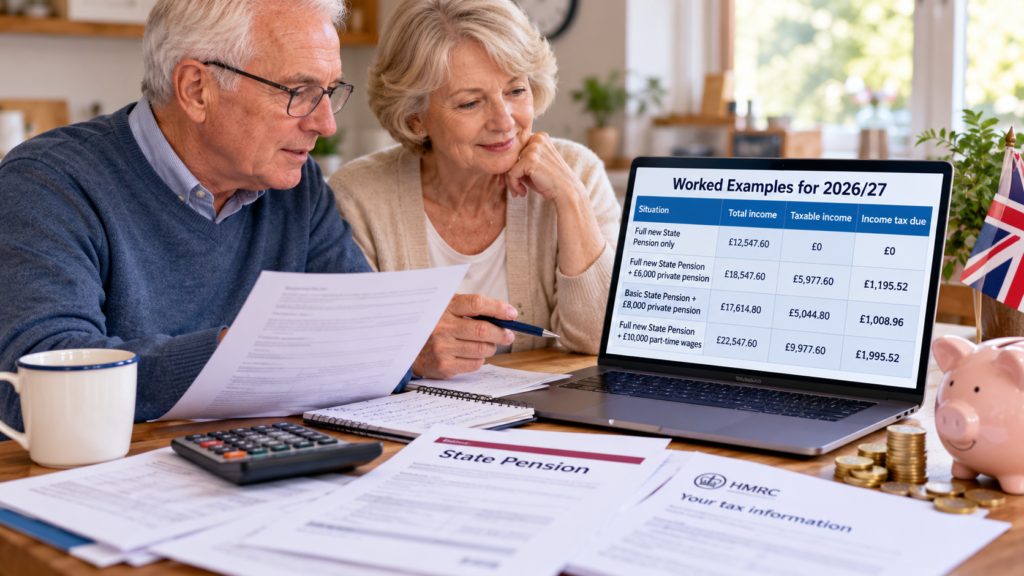
The following examples show how the rules apply in practice. Each one uses simple figures so you can adapt them to your own situation.
| Situation | Total income | Taxable income | Income tax due |
|---|---|---|---|
| Full new State Pension only | £12,547.60 | £0 | £0 |
| Full new State Pension + £6,000 private pension | £18,547.60 | £5,977.60 | £1,195.52 |
| Basic State Pension + £8,000 private pension | £17,614.80 | £5,044.80 | £1,008.96 |
| Full new State Pension + £10,000 part-time wages | £22,547.60 | £9,977.60 | £1,995.52 |
In each case the tax is calculated at 20% of the amount above £12,570, and the person on part-time wages pays no National Insurance on that income because they are over state pension age.
What is changing in 2027
A significant change is coming because the state pension rises every year under the triple lock, while the Personal Allowance is frozen. From April 2027 the full new State Pension is expected to go above £12,570 for the first time, which would technically make part of it taxable even for people with no other income. The government has said that pensioners whose only income is the full new or basic State Pension will not have to pay tax or deal with small tax bills through the simple assessment process during this Parliament, and that more details on how this will work will be set out at the Budget. It is worth checking the latest announcements before April 2027, because the exact rules, and who qualifies, may be clarified. People with even a small private pension are not expected to be covered by this protection.
Practical ways to keep your tax bill down
There are several steps that can legitimately reduce what you pay. Married couples and civil partners can use the Marriage Allowance, which lets one partner transfer £1,260 of their unused allowance to the other, provided the person receiving it is a basic-rate taxpayer and the person giving it has income below the Personal Allowance. Holding savings in ISAs shields the interest from tax entirely, and it can be worth moving cash into ISAs gradually over several years. Couples can also make the most of both partners’ allowances by arranging investments and savings so that income is split between them in a sensible way. Finally, always check your tax code every year, since mistakes on codes are common and can lead to paying too much or building up a bill you did not expect. The standard code for most people is 1257L, and if yours looks different you can ask HMRC why.
Frequently asked questions
Do I have to pay tax on my state pension? Only if your total taxable income for the year is above your Personal Allowance. The state pension counts towards that total even though tax is not taken before it reaches your bank account.
Do pensioners pay National Insurance? No. Once you reach state pension age you stop paying National Insurance on your earnings, even if you carry on working.
Will HMRC contact me if I owe tax? If you owe tax and have no other income to collect it from, HMRC may send you a simple assessment letter or ask you to complete a Self Assessment tax return. If you have a private pension, they will usually adjust your tax code so the tax is collected through that pension.
Is there a higher tax-free allowance for over 65s or over 75s? No. The extra age-related allowance no longer applies to people reaching retirement today, so the Personal Allowance is the same for pensioners as for everyone else.
Can I earn more than £12,570 and still pay no tax? Yes, in some cases. Savings interest, ISA income, dividends, Rent a Room income and the tax-free part of a pension lump sum all sit outside or alongside the main allowance, so total receipts can be higher than £12,570 without a tax bill.
Disclaimer
This article is for general information only and does not constitute financial, tax or legal advice. Tax rules, allowances and government policies can change, and individual circumstances differ, so the figures here may not apply to your situation. Please check the latest guidance on GOV.UK or speak to a qualified tax adviser or a free service such as MoneyHelper or Pension Wise before making decisions about your pension or income.