

If you’ve ever heard golfers shout “Eagle!” after a great shot, you might wonder what that word actually means. So, whats an eagle in golf? An eagle is a score of two strokes under par on a single hole. It’s one of golf’s most exciting moments, and it happens far less often than a birdie. This guide breaks down exactly what an eagle is, how it compares to other scores, and why landing one feels like such a big deal.
What Does Eagle Mean in Golf?
An eagle happens when a golfer finishes a hole in two strokes fewer than the par set for that hole. Par is the number of strokes a skilled golfer is expected to need to complete a hole. So, if a hole has a par of 4 and you finish it in just 2 strokes, that’s an eagle.
This term fits into a whole family of bird-themed golf scores. Each name reflects how impressive the score is compared to par. A birdie is one stroke under par. An eagle is two strokes under. A double eagle, also called an albatross, is three strokes under par. Understanding where an eagle sits in this system helps explain why players get so thrilled when they score one.
Why Golf Uses Bird Names for Scores
Golf scoring terms borrowed bird imagery because birds represent things that soar above the ordinary. A “birdie” started as slang for anything excellent, and the eagle name followed naturally since eagles are bigger, rarer, and more impressive than typical birds. This naming pattern makes golf scoring easier to talk about and adds a bit of fun to a game that can otherwise feel very technical.

How Do You Score an Eagle?
Scoring an eagle depends on the par of the hole you’re playing. Here’s how it breaks down across different hole types.
Eagle on a Par-3 Hole
On a par-3 hole, you would need to score a 1, which means a hole-in-one. Because par-3 eagles require the ball to go in on the very first shot, they are extremely uncommon, even among professional golfers.
Eagle on a Par-4 Hole
On a par-4 hole, an eagle means finishing in just 2 strokes. This usually requires a strong drive that reaches the green, followed by making the putt. These eagles are more common than par-3 eagles because they don’t require a hole-in-one, just excellent distance and accuracy.
Eagle on a Par-5 Hole
On a par-5 hole, an eagle means finishing in 3 strokes. Golfers often reach this by hitting two strong shots to get near the green, then sinking the putt on their third stroke. Par-5 eagles are the most common type because there’s more room to make up strokes across three shots instead of relying on one perfect shot.
Eagle vs. Birdie vs. Bogey: Comparing Golf Scores
It helps to see how an eagle fits alongside other common golf terms.
- Birdie: One stroke under par. This is the most common “good” score beyond simply making par.
- Eagle: Two strokes under par. Much rarer than a birdie and considered a standout moment in any round.
- Par: Finishing the hole in the expected number of strokes. This is the baseline every score compares to.
- Bogey: One stroke over par. This is common even among skilled golfers and isn’t seen as a bad outcome overall.
- Double bogey: Two strokes over par, generally viewed as a rough hole.
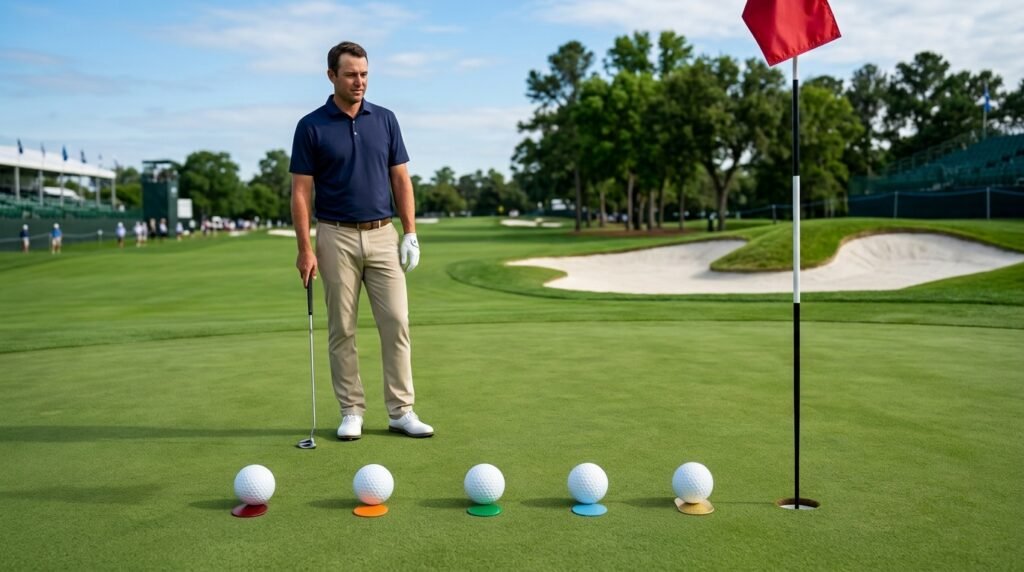
Seeing these terms side by side shows why an eagle stands out. It’s not just “good,” it’s a clear jump above the more common birdie.
How Rare Is an Eagle in Golf?
Eagles are considered rare for both amateur and professional golfers, though the level of rarity differs quite a bit between the two groups.
For everyday recreational golfers, an eagle can be a once-in-a-season or even once-in-a-lifetime moment. Since most amateur players don’t hit fairways and greens with total consistency, lining up the shots needed for an eagle takes a mix of skill and good fortune.
Professional golfers score eagles more often because of their precision and distance off the tee, especially on par-5 holes where reaching the green in two shots is realistic. Still, even at the professional level, eagles happen far less often than birdies during a typical tournament round. Par-3 eagles, which require a hole-in-one, remain rare even for tour professionals, since they depend on a single shot landing perfectly.
What Makes an Eagle Difficult to Achieve
A few factors make eagles hard to pull off consistently. First, they require near-perfect shot-making, since there’s little room for error when you’re trying to finish two strokes below what’s expected. Second, course conditions like wind, hole layout, and green speed can easily throw off the precision needed. Third, confidence and pressure play a role, since players sometimes hesitate on the aggressive shots that eagles require. This combination of skill, conditions, and mental focus is exactly why an eagle feels like such an accomplishment when it happens.
Real Examples of Eagles in Golf
Eagles show up in memorable ways across different types of rounds. A golfer might reach a par-5 in two solid shots, then sink a mid-range putt for an eagle 3. Another common scenario is a golfer hitting a strong approach shot on a par-4 that lands close to the pin, followed by a short putt for an eagle 2. On rare occasions, a golfer might even hole out directly from the fairway on a par-4, scoring an eagle without ever needing to putt. These moments tend to stand out in a round because they shift momentum and often boost a player’s confidence for the holes that follow.

FAQ: Common Questions About Eagles in Golf
What does it mean to score an eagle in golf?
Scoring an eagle means finishing a hole in two strokes fewer than its par. For example, finishing a par-5 hole in just 3 strokes counts as an eagle, since it’s two strokes below the expected par score for that hole.
Is an eagle better than a birdie?
Yes, an eagle is better than a birdie. A birdie is one stroke under par, while an eagle is two strokes under par, making it a rarer and more impressive score during a round of golf.
What is a double eagle called?
A double eagle is also called an albatross. It means finishing a hole three strokes under par, which usually only happens on par-5 holes when a player holes out on their second shot.
Can you score an eagle on a par-3 hole?
Yes, but it requires a hole-in-one, since an eagle on a par-3 means finishing in just one stroke. This makes par-3 eagles extremely rare, even for professional golfers.
How common are eagles in professional golf tournaments?
Eagles happen in most professional tournaments, especially on reachable par-5 holes, but they’re still far less frequent than birdies. Most pros might score only a handful of eagles across an entire season.
Do amateur golfers ever score eagles?
Yes, though it’s uncommon. Many amateur golfers go years without scoring an eagle, since it requires strong shots on back-to-back strokes plus a bit of good luck lining up the putt.
Why is it called an eagle in golf?
The name follows a tradition of using bird names for strong golf scores, starting with “birdie” for a good score. Since eagles are bigger and more impressive birds, the term was used for an even better score.
Wrapping Up
Now that you know whats an eagle in golf, you can appreciate just how special this score really is. It takes precision, smart course strategy, and sometimes a little luck to pull off. Whether you’re watching a tournament or working on your own game, keep an eye out for that rare eagle moment. It’s one of the most rewarding scores in all of golf, and understanding it makes the game even more fun to follow.
Desclaimer:
This article reflects general golf terminology and information available at the time of writing. Golf rules and common usage may be updated or clarified over time, so readers are encouraged to check with official golf associations or their local course for the most current guidance.