
If you are thinking about Botox or have just had your first treatment, the first question on your mind is probably how long you will have to wait to see results. The short answer is that most people notice the first changes within 3 to 7 days, and the full effect usually appears at around 14 days. However, the exact timing depends on the area treated, the product used, your body, and even your lifestyle.
This guide walks you through the whole timeline, explains why Botox needs time, and shares practical steps to help you get smooth, natural-looking results.
The Quick Answer: Botox Timeline at a Glance
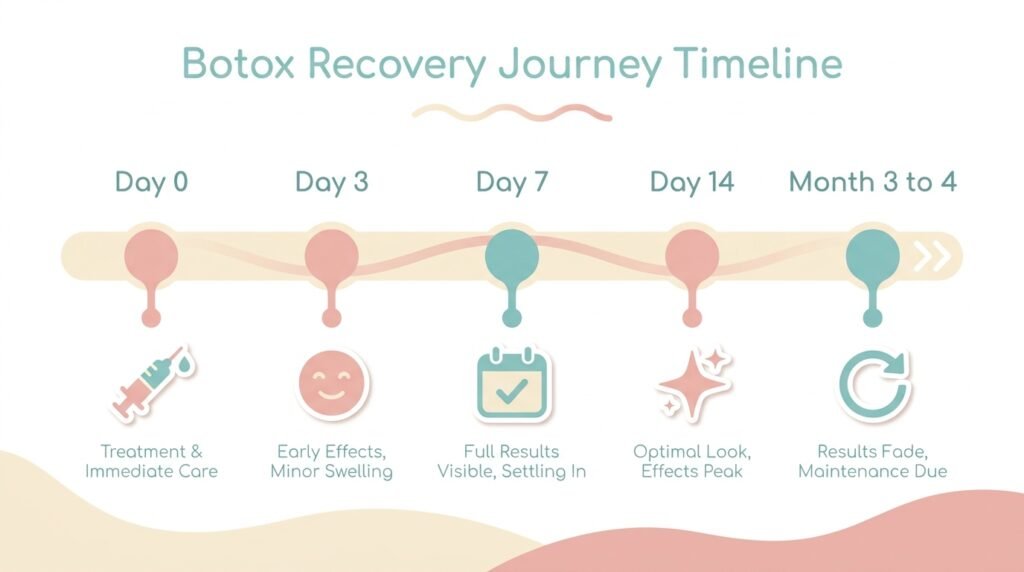
Botox does not work the moment the needle comes out. It works gradually as the medicine settles into the treated muscles and slowly blocks the signals that tell them to contract. Most people notice their first changes between day 3 and day 7, although a few people see a softening as early as 24 to 72 hours after treatment. The full result is generally visible around day 14, which is why many clinics schedule a follow-up visit at the two-week mark. From there, results typically last about three to four months before the muscles slowly regain movement.
Why Botox Does Not Work Right Away
To understand the waiting time, it helps to know what Botox actually does. Botox contains botulinum toxin type A, a purified protein that temporarily reduces muscle activity. Muscles move because nerves release a chemical messenger called acetylcholine, which tells the muscle to contract. Botox blocks this release at the point where the nerve meets the muscle, so the muscle cannot tighten as strongly.
This blocking process is not instant. After the injection, the product needs time to reach the nerve endings, enter them, and interrupt the release of acetylcholine. Once this happens, the muscle weakens gradually rather than suddenly. That is why you may feel like nothing is happening for the first couple of days, and then you slowly notice that your frown or forehead lines are softer and harder to create.
Botox Results Day by Day
Day 0 (treatment day). Right after your appointment you may see small bumps where the injections were placed, and there may be slight redness. These usually settle within an hour or two. You will not see any wrinkle-softening yet, because the product has only just been placed.
Days 1 to 2. Most people still see little change. Some people who respond quickly may feel a slight heaviness or notice that their expressions feel a bit different, but for most, the muscles are still moving normally.
Days 3 to 5. This is when the first real changes often show up. You may find that it is harder to frown or raise your eyebrows the way you normally do. Lines between the eyebrows often start to look softer.
Days 5 to 7. The effect becomes more noticeable at this point. Most people can clearly see a difference in the treated area, and friends or colleagues may comment that you look rested, without being able to say why.
Days 10 to 14. This is the peak. The full effect of your treatment is visible, and any small differences between the left and right sides can be spotted now. If something looks uneven or if a muscle is still too active, this is the ideal time to see your provider for a touch-up.
Weeks 3 to 12. The results stay stable during this period. Your skin looks smoother, and lines caused by muscle movement remain relaxed.
Months 3 to 4 and beyond. Muscle activity slowly returns, and the lines gradually reappear. Many people book their next appointment during this window to keep the results going.
How Long Botox Takes to Work by Treatment Area
Different areas of the face and body respond at slightly different speeds, mainly because of muscle size and strength.
Frown lines between the eyebrows, often called the “11s,” are one of the most common treatment areas and usually show results within 3 to 7 days. Forehead lines and crow’s feet around the eyes tend to follow a similar timeline, with visible softening within the first week and the full effect by two weeks.
Larger and stronger muscles take longer. When Botox is used to slim the jawline by treating the masseter muscle, the change often takes several weeks to appear, and the visible slimming effect can take around one to three months as the muscle gradually becomes smaller from reduced use.
For medical uses, timing varies too. Botox for excessive underarm sweating usually starts working within a few days to two weeks. Botox for chronic migraine is different, because it is given in a series of injections and the benefit may build over two or three treatment cycles rather than after a single visit. Botox for neck muscle spasms or eyelid twitching may take from several days to two weeks to show a clear improvement.
Does the Brand of Botulinum Toxin Matter?
Botox is the best-known brand, but several similar products exist, and they can differ slightly in how quickly they start working. Botox, the original, typically shows results within 3 to 7 days. Dysport is often reported to work a little faster, with some people noticing changes in 2 to 3 days. Xeomin usually falls in the range of about 3 to 5 days. Jeuveau is comparable to Botox, while Daxxify is a newer option that some people notice within one to two days and that is designed to last longer, often around six months. Individual response still varies, so these numbers are general guides rather than promises.
What Can Make Botox Work Faster or Slower?
Several factors influence how quickly you see results, and knowing them can help you set realistic expectations.
Muscle strength and size are among the biggest factors. People with thicker, stronger facial muscles, which is common in men, may need a higher dose and can take a little longer to see the full effect. The dose itself matters too, because too little product can lead to a slow or weak result.
Your metabolism and general health also play a role. Some people simply process the treatment faster than others, and there is no reliable way to predict this before your first session. The skill of your injector is equally important, since precise placement in the right muscles at the right depth leads to more predictable timing and better results. Finally, the way the product was stored and prepared can affect its strength, which is one more reason to choose a licensed, experienced provider who buys products from authorized sources.
Aftercare Tips That Support the Best Results
What you do in the hours after treatment can help the product stay where it was placed. It is generally recommended to stay upright for about four hours after your appointment and to avoid pressing, rubbing, or massaging the treated area for the rest of the day, because this could move the product to nearby muscles. Strenuous exercise, saunas, and very hot showers are usually best avoided for around 24 hours, since heat and increased blood flow may affect how the product spreads. Many providers also suggest skipping alcohol on the treatment day to reduce the chance of bruising.
On the other hand, gently moving your facial muscles, such as frowning or raising your eyebrows in the first few hours, is sometimes recommended by providers, although advice varies, so it is best to follow the specific instructions you were given.
What Should You Do If Botox Is Not Working?
If you reach day 14 and see no change at all, do not panic. First, remember that some people simply take a little longer. If you still see no change after two weeks, contact your provider. They can check whether the dose was too low or whether a specific muscle was missed, and a small touch-up can often solve the problem.
In rare cases, a person may not respond well to botulinum toxin because their body has developed antibodies against it, which is more likely after frequent, high-dose treatments over many years. Your provider may suggest a different brand or a longer gap between sessions if this is suspected.
Common Side Effects and When to Seek Help
Botox is one of the most widely performed cosmetic treatments and is considered safe when given by a trained professional. The most common side effects are mild and temporary, including small bruises, tiny bumps, redness, tenderness, and sometimes a mild headache in the first day or two. A less common effect is a drooping eyelid or eyebrow, which happens if the product moves into a nearby muscle. This can last for several weeks but does improve on its own.
You should contact a doctor right away if you have trouble breathing, swallowing, or speaking, or if you experience widespread muscle weakness, since these are rare but serious signs that need urgent care.
How to Make Botox Results Last Longer
Botox typically lasts about three to four months, though this varies by person and area. Regular treatments at consistent intervals can help, because some people find that muscles become slightly weaker over time and the results last a bit longer. Protecting your skin with daily sunscreen, avoiding smoking, staying hydrated, and using a good skincare routine will also help your skin look its best, since Botox only relaxes muscle-related lines and does not treat sun damage or loss of skin firmness.
Final Thoughts
So, how long does Botox take to work? Most people see the first signs in 3 to 7 days, the full result at about 14 days, and lasting effects for around 3 to 4 months. Patience is the key, especially in the first two weeks, since results build slowly and naturally. Choosing a qualified provider, following aftercare advice, and booking a follow-up visit at the two-week mark will give you the best chance of a smooth, natural, and satisfying outcome.