
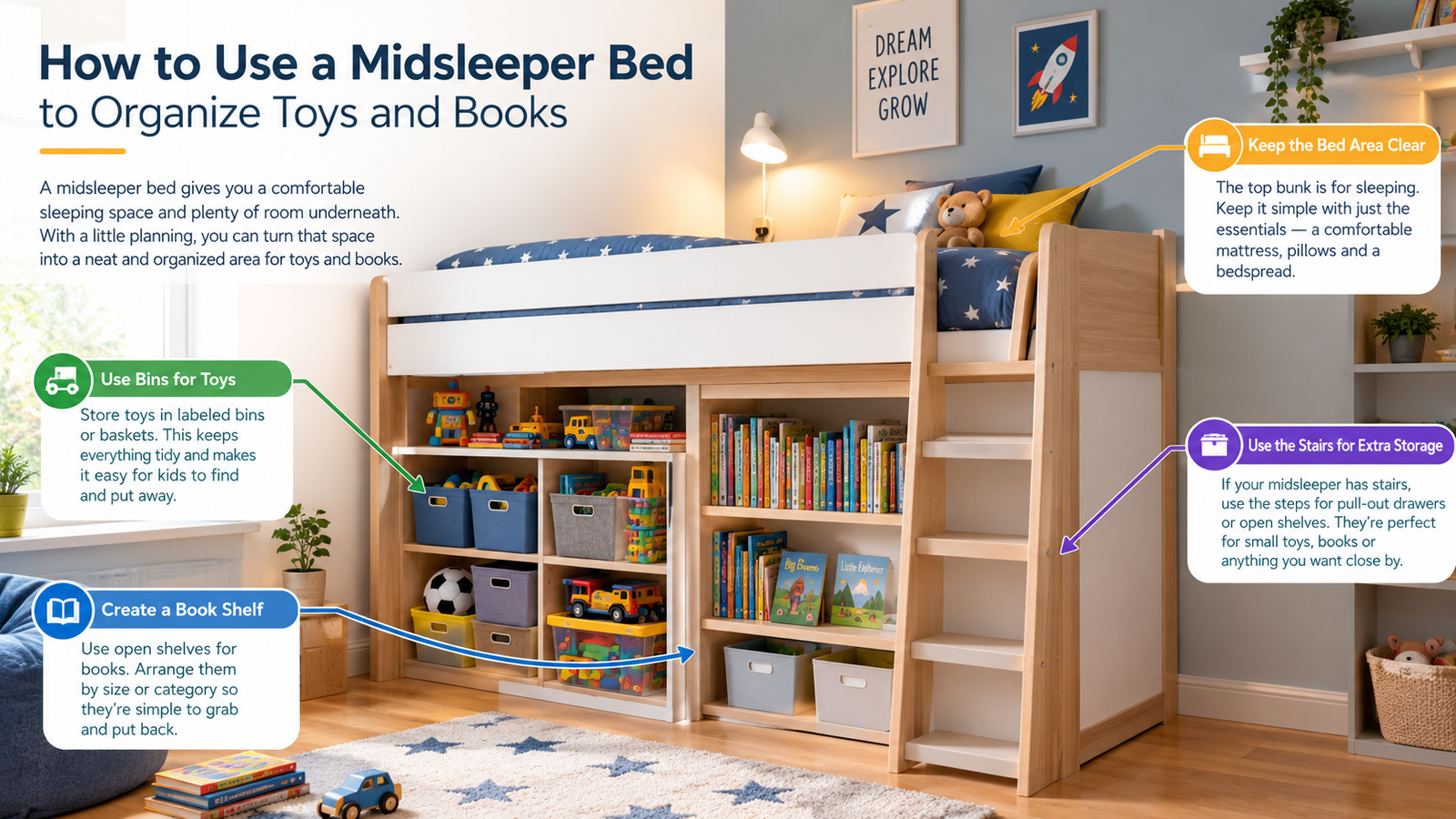
A Midsleeper Bed is one of the smartest furniture choices for a child’s bedroom because it combines sleeping space with practical storage underneath. By using drawers, shelves, baskets, and labeled zones beneath the bed, you can turn scattered toys and books into an organized, easy-to-maintain system that saves floor space and encourages children to tidy up independently. Midsleeper beds are raised beds with space beneath the sleeping platform, often designed for drawers, shelving, desks, or play areas.
What Is a Midsleeper Bed?
A Midsleeper Bed is a raised children’s bed that sits between a standard single bed and a taller high-sleeper or loft bed. Its sleeping platform is elevated enough to create useful space underneath, but not so high that it feels overwhelming for younger children. Most models are accessed by a short ladder or steps and are commonly recommended for children aged six and above.
The main advantage of a Midsleeper Bed is that it uses vertical space. Instead of placing a bed directly on the floor and losing the area beneath it, the raised frame creates room for storage boxes, bookshelves, cupboards, or a small play corner. This makes it especially useful in smaller bedrooms where every square metre matters.
Why a Midsleeper Bed Helps With Organization
Children’s rooms often become cluttered because toys, books, art supplies, and games do not have a clear home. A Midsleeper Bed solves this problem by giving you a dedicated storage zone directly beneath the sleeping area. Many designs include built-in drawers, cubbies, shelves, or cupboards, while open models can be fitted with freestanding storage units.
This arrangement keeps frequently used items close to the play area but off the floor. When toys are visible, accessible, and easy to put away, children are more likely to participate in cleaning up. A well-organized Midsleeper Bed also makes the room feel larger because bulky storage no longer needs to occupy separate wall space.
Create a Bookshelf beneath the Bed
The space under a Midsleeper Bed is ideal for a low bookshelf or cube storage unit. Many Midsleeper Bed designs already include shelving, while others leave enough clearance for a separate bookcase. Cube shelves are particularly useful because each cube can hold books, baskets, or display items.
Arrange books with covers facing outward where possible. Forward-facing books are more attractive to young children and encourage independent reading. Keep the most frequently read books at child height, while placing seasonal, reference, or less-used books higher or toward the back.
Separate Books by Purpose
Rather than mixing all books together, divide them by purpose. Create one section for bedtime stories, another for school or library books, and another for activity books, comics, or colouring books. This makes it easier for children to find what they need and return it to the correct place.
If your child uses the bedroom for homework, reserve one shelf or drawer for school-related items. Notebooks, reading books, pencils, and stationery can be stored together so they are ready for the next school day. Some Midsleeper Beds also include a pull-out desk, which can create a complete study zone beneath the bed.
Use Drawers for Larger Toys
Deep drawers beneath a Midsleeper Bed are perfect for larger toys that do not fit neatly on shelves. Items such as dress-up clothes, large vehicles, board games, blankets, and soft toys can be stored out of sight while remaining accessible. Drawers help the room look tidier because they hide visual clutter.
To make drawers more functional, avoid overfilling them. Use drawer dividers or smaller boxes inside each drawer to keep categories separate. For example, one drawer may contain dress-up accessories, while another holds games and puzzles. This prevents children from having to dig through everything to find one item.
Safety Tips for a Midsleeper Bed
Safety should always come first when using a raised bed. Follow the manufacturer’s age guidance, assemble the bed correctly, and check bolts, fittings, guardrails, and the ladder regularly. Many Midsleeper Beds are recommended for children aged six and over because children need the coordination to climb safely.
Use the correct mattress size and depth, since a mattress that is too thick can reduce the effectiveness of the safety rails. Keep the ladder clear of toys, avoid jumping on the bed, and anchor the frame to the wall if the design requires it. These precautions help ensure the bed remains secure during every day use.
Choose Storage That Grows With Your Child
Children’s needs change quickly, so choose flexible storage solutions. Baskets, cube units, and removable labels can be updated as your child grows. What begins as a toy-storage area can later become a homework station, bookshelf, hobby corner, or space for sports equipment.
A Midsleeper Bed with modular storage is a long-term investment. Instead of replacing furniture every few years, you can simply change the containers, labels, and layout to suit your child’s new interests and school requirements.
Conclusion
A Midsleeper Bed is more than a place to sleep; it is a practical organization system for a child’s bedroom. By using the space beneath the bed for clear toy bins, labelled drawers, bookshelves, and a cosy reading nook, you can reduce clutter while making toys and books easy to find and put away. The raised design creates valuable storage space without taking up additional floor area, making it especially helpful in smaller rooms.